Budapest Daze

2016-04-06 09.15.01

The roots of the city

Exploring and discovering. I’m mainly in a little, hot classroom in an old building with 25 other people discussing documentary but the films we see are taking us around the world and then there’s the wandering in Budapest too.

2016-04-06 08.54.46

Once upon a time, craft displayed itself more openly, as in the manhole covers that dot the city streets

The main streets bustle like main streets everywhere but the small side streets outnumber them and one can wander the city away from cars for the most part and discover things like:  Music
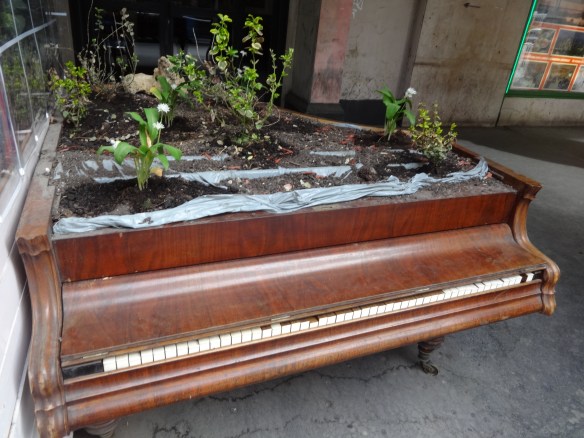
2016-04-06 00.51.27

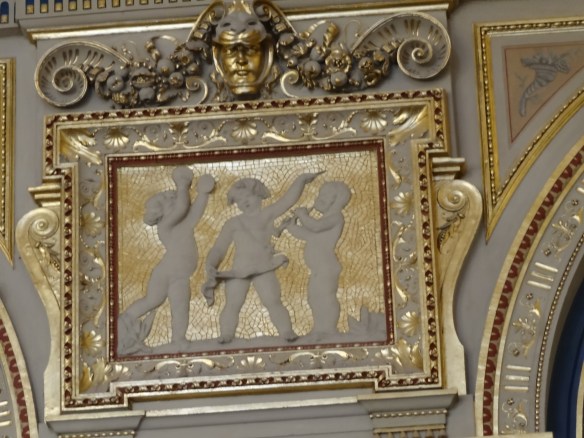
Or: Decorative friezes four stories in the air

2016-04-06 09.32.19

2016-04-06 09.07.37

And Street Artists too, along the Danube in this case

Speaking of which, here it is: the Danube, the Buda side Castle that tourists flock to, the #2 tram that runs along the river, and the sun in late afternoon.
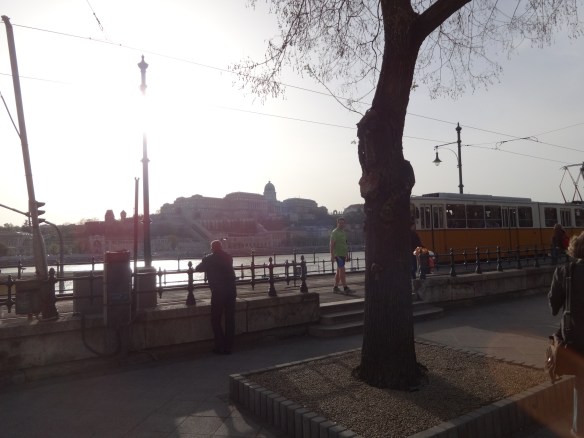
2016-04-06 08.59.53

There is also loss. This used to be Cafe Alibi, a wonderful little cafe/restaurant with delicious food and a lot of classic atmosphere, with piano music and tables for about 20. Now, it’s something else entirely:

Former home of terrific bistro

BYE BYE ALIBI, HELLO STARBUCKS

2016-04-06 09.40.11

The language of signs: “The Ministry of Human Capacity” has a limited capacity for the handicapped; they have to enter around the corner.

And the people. I always wonder what their stories are: where do they live, what do they do, where are they going?

2016-04-06 08.56.40

Some announce what they are doing now, but what will they do later tonight? And what are they guarding?
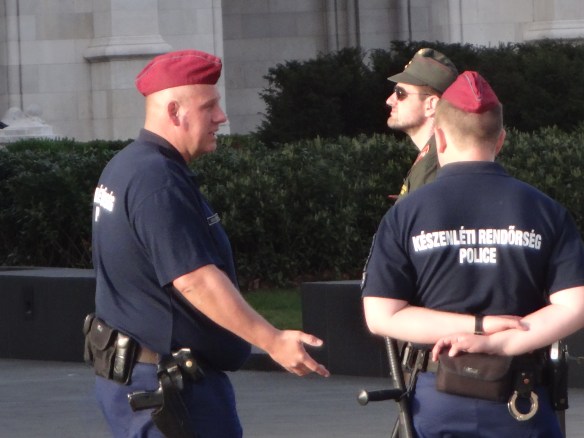
2016-04-06 09.29.25

This is what they guard: Parliament, on the Danube. No assaults from the river are anticipated…

2016-04-06 09.28.11.jpg

That’s the almost fairy tale part of an old city.

Meanwhile, there’s today and dinner. And I return to a restaurant I visited four years ago, as good now as it was then:

2016-04-06 09.46.28

Salaam Bombay from my table: the gems beneath the glass and the view of the front of the restaurant, but the food’s about to arrive, so it’s time to step back out of the Daze… for now.
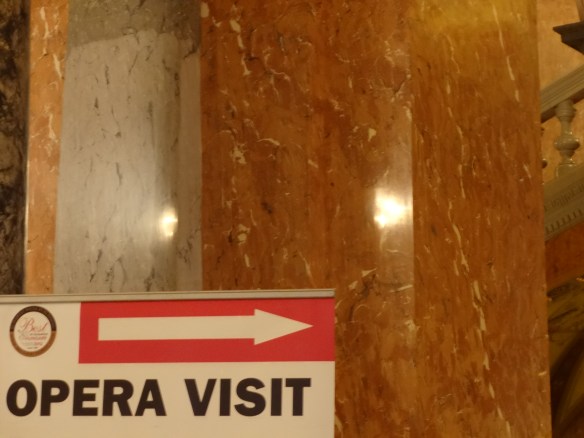
Budapest in Spring

opera 1

Stay tuned; more on the opera below

Here for a week to do a course for documentary nomads, grads specializing in doc films who start in Barcelona, come here, then finish in Brussels. Today was Get over Jet Lag day.

cafe7

Always start with a cappuccino in a nice little cafe.

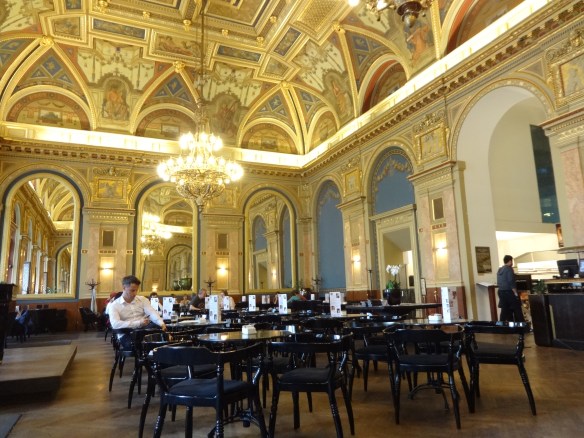
The cafe ceiling has quite stunning details.  Actually it’s a bookstore, opposite the Opera House, but it’ll do.

cafe 2

The U.S. is just not old enough for all this glorious trimming

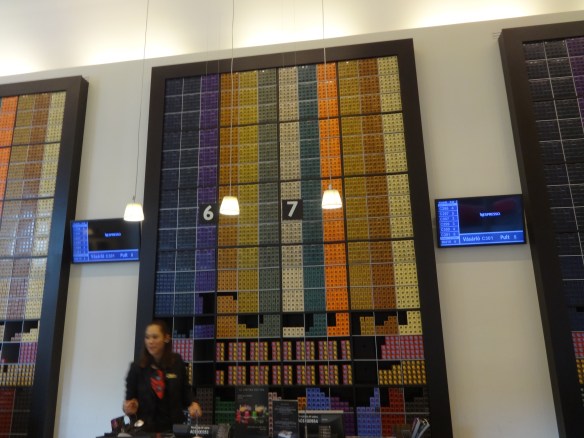
Having a coffee here, by the way, took me past the shrine to Nespresso, also near the Opera and shrouded in reverence for one of the most environmentally wasteful products yet conceived: the single shot of coffee pod.

Nespresso 3

The many flavors of Nespresso, a few are here

And if you need a box or two…

Nespresso

Yes, that colorful array is box after box of Nespresso pods

And then there’s the Opera itself, or the entrance, all I could do today.

opera 4 stairs

I wondered if Escher had a hand in designing this

And don’t forget the floor:

opera 5 floor

But Buadpest has a lot of history and nearby is the House of Terror. Not the usual Inquisitorial torture devices, but a painful history of traitors and killers, spies and betrayals, mostly after World War II, during the Soviet era. It was closed today but these photographic tributes to some who were killed are on the exterior wall:

House of Torture ext

There’s more to come and later in the week I plan to go inside to learn more about the terrors.

Science, Fraud and Documentary

Tribeca film fest plans to show an anti-science, fact-denying hoax that actually costs lives. VAXXED, akin to Dinesh DeSousa’s OBAMA 2016, denies scientific evidence, established fact, makes fraudulent claims, and is utterly indifferent to the truth. It claims vaccines cause autism and the Festival wants us to think this is a “controversy” rather than a fraud. The Festival has it on its program.
Maybe the FACT of climate warming is a controversy in need of a good forum like Tribeca when the issue is what to do about it.
What to do about this film is to protest, boycott, and warn others. Children’s lives are at stake. The unvaccinated can and do die of preventable diseases and they allow those diseases to persist and spread. The film’s claims are wrong. It’s main “champion” is a doctor who lost his license for his failure to abide by the scientific method and promoted bogus research as true. Tribeca’s failed to do the least bit of fact-checking and seems eager only to draw a crowd, no matter how misguided the message.
This Festival is heading for the recycling center, which is where the wayward and deluded go now that, in this election year, all the handbaskets to hell are overflowing.
Let Tribeca know those of us in documentary film study do NOT support hoaxes, lies and frauds masquerading as “controversy” and exploiting documentary conventions to do it.

2 Knock Out Films

So what are they?  Where to Invade Next and Room.  One doc one fiction and both tremendous.

Michael Moore has taken his boat ride to Cuba with 9/11 rescuers who couldn’t get adequate medical care in their own country and find what they need in Cuba, from Sicko, and made that gesture into a film. Did you know Italian workers can get 8 weeks of paid vacation time/year, 5 months of maternity leave, paid, and a 13th month of salary routinely? Did you know that half of the members of corporate Boards of Directors have to come from the workers in Germany? Or that Finland is far ahead of the U.S. in achieving educational goals by spending less time in school, requiring little or no homework, having no standardized testing, and relying on innate curiosity to drive students to learn?

How about Norway’s prisons, even for murderers, where prisoners have apartments with their own keys and freedom of movement as they learn how to become responsible member of society? Or Slovenia’s free university education for anyone, including foreign students? (It’s just one of dozens of countries to do so.) Or the gourmet meals Moore enjoyed in France, 3 or 4 courses, with scallop appetizers and fantastic main courses, followed by cheese and desert, not at a restaurant, but at a middle school? Or the Constitutional right to equity that women enjoy in Tunisia but not in the U.S.?

The list goes on. Moore has gone to numerous countries, not to expose their corruption and failures but what they do right. And they do a lot that we don’t even know about, even though in many cases, the idea first came from here. Penchants for insularity and attitudes of superiority have cost us dearly. Presidential candidates lie about our greatness when most of the industrial world, and beyond, is doing better than we are with such basic issues as health, education and welfare. The film is a genuine eye opener and could easily form the platform base for Hillary or Bernie, if they were brave enough to say we can actually learn from people different from ourselves.

Room is a different kettle of fish. A young woman and her five year old son have been confined to a single room for seven years when the film begins. We learn she’s been abducted and help captive, that her son has no clue what the rest of the world is like. It is, in fact, only the pretend world he sees on TV, and the view from the too high to reach skylight is like the Reality that Plato’s prisoners fail to turn around to see.  But they are not duped by illusions; they are held captive by a pervert.

The film’s power resides in 1) the fact that much of it is told from the pov of the five year old boy who is just beginning to grasp what lies beyond his room, 2) the incredible performance by Brie Larson as the fiercely protective mother of a son whose father is not to be spoken of, trusted, or believed for a moment, and 3) from the totally not fairy tale aftermath to freedom when Joy and Jack, the captives, must contend with friends and family and media that cannot comprehend or accept what these two brave souls have gone through. The film packs a visceral punch far beyond that of most films. It hits at our wounds from childhood and how we are all trapped inside the rooms and stories we are given and create. It forces us to ask how hard are we willing to struggle to escape, what price we are willing to pay, with what risk to body and soul? It’s no wonder Larson is up for an Oscar and very likely to win, but even more, this is a film up for consideration as one of the most painful, probing, disturbing, and emotionally powerful films of recent years.  It operates in a zone far beyond the formulaic dimensions of the otherwise truly best films of the year, Spotlight,  The Big Short and Revenant. And, perhaps because of that, it’s not an Oscar nominee, but it is one  of the most memorable films I’ve seen in quite some time.

Primaries and Primates

They’re all primates, these candidates, even if some don’t seem much more evolved than our evolutionary predecessors. But they all have a way of tapping into hopes and fears, for better or, more often, for worse.

The Republican candidates are a gang of teen-age trouble makers, eager to mock their elders (one of whom has already been elected President), denounce their peers, and denigrate their opponents. No integrity, decency or wisdom limits their thoughts. They are invincible, invulnerable, immortal, and dumb as all teens with a not yet fully formed brain are, especially males (and some females, think Carly) who aspire to be one.

The Democrats have a woman who we’re told we better vote for or else if we ever want to see women burst through this particular glass ceiling (but maybe think Carly again before you get down for that one). We also have a shoot from the hip, tell it like it is outsider who, like some of the Republicans, thinks it’s all rigged and needs radical overhaul, but not dismantling so much as democratizing.

He, Bernie, just won in New Hampshire. And what does Hillary’s camp do? Congratulate him and say how much she looks forward to more intense debate on issues and principles? Nope. More like, Yeah, he won, but it’s only New Hampshire. After she too spent huge amounts of time and money there.  Does that sound a wee bit peevish and disingenuous?  Isn’t that part of her problem: she sounds like she says what’s convenient or opportunistic or what votes have heard before and she thinks they want to hear again.

A news report said, “One troubling sign: Mr. Sanders was the choice, nearly unanimously, among voters who said it was most important to have a candidate who is “honest and trustworthy.””

There you have it in a nutshell. Bernie may not have all the answers and may not have the experience and expertise of a Clinton, but he has heart, and soul, and honesty. And voters can’t get enough of it. And if they start out Republican, they think the bluster puss with New York values has it too. But his racism and elitism and contempt for others will bring him down eventually.

It’s really a question of what can the Democrats do to win back Congress more than how to sweep aside the juvenile delinquents who think they belong in the White House.

All in my humble opinion, of course.

Art at Stanford

2015-12-26 15.49.00

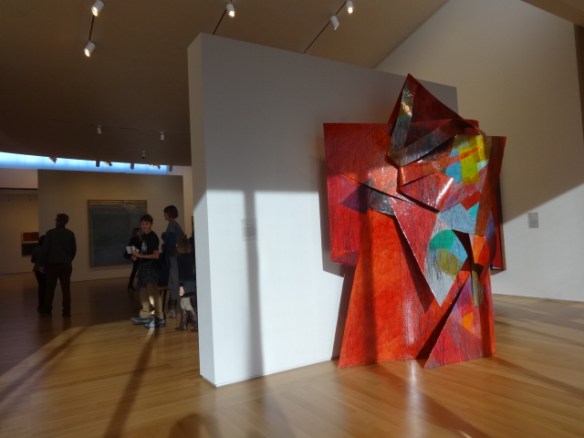
Just a short drive down the Peninsula from San Francisco the Cantor and Anderson Art Museums are well worth the trip. Or a visit from elsewhere. Cantor is the older museum, with the cafe, and Anderson a newer one devoted to the collection of the Anderson family. Anderson is entirely modern and contemporary art, from Ellsworth Kelly and Sean Scully, as in Scully’s stunning Red Ascending, below, to a rich array of contemporary work, also below.

2015-12-26 15.41.45

Sean Scully’s Red Ascending, one of the gems in the Anderson collection.

2015-12-26 15.43.21

The red post in the background is entitled, gallows, which has an ironic link, of course to the three police officers to its right. The cube captures light in fascinating ways.

At the Cantor Rodin is always on view as is a good sample of the permanent collection. Right now, a special exhibition features two new acquistions: an Edward Hopper,  Corner Store, and the notebooks of Richard Diebenkorn, a trove of amazing detail, some repetitious to be sure but often surprising.

2015-12-26 14.49.56

A page from notebook 39 in the new acquisition of Diebenkorn’s sketchbooks

With SF MOMA still closed, Stanford makes a very worth while destination.


The Big Short: Documentary Fiction

The Big Short is as close to a documentary as a mainstream fiction film can be. We know how feature films often borrow documentary devices to add a touch of realism to their appeal. Dr. Strangelove used hand held cameras for the scenes when the military tries to retake the army base that Jack the Ripper has cordoned off so he can protect his precious bodily fluids from Soviet poisoning, for example, but seldom has an entire fiction film relied so heavily on the documentary tradition to tell its story. Not only is The Big Short based on real people and real events, as historical narratives often are, it utilizes the direct to camera voice of authority as Jared Vennett (Ryan Gosling), one of the instigators of the strategy at the heart of the film of betting against the ever-rising price of bundled mortgages, confides to us about what he and others are up to. It utilizes cut aways to real life people who were part and parcel of the debacle from Hank Paulsen, intoning how solid it all is as it begins to crumble, to Lance Armstrong, as a metaphorical example of lying and deception at work in every field of American life. It turns to tongue in cheek “experts” to explain the exotic CDOs and other derivates that fueled the bubble, experts like Anthony Bourdain who compares the bundling of mortgages into various tranches to making a fish stew from left overs.
The film has plenty of laughs, painful though they are, when we see, for example, the burly tattooed husband who hangs on to his rented house in an abandoned Florida development, hoping the landlord will finally pay the mortgage, only to have the two Wall Street investigators, working for the fantastic Steve Carell, jump away from a snapping alligator (metaphor anyone?), and for the tattooed guy to be in the background of a much later shot packing up and moving out, done in by other people’s greed.
Our government, from President Obama on down–and it’s way way down once we get to the financial team that ignored,stone walled,and ultimately bailed out the corrupt bad guys who took as much as they could as dishonestly as they could–never looked so depraved and bereft of either awareness of the consequences of short term actions or of basic decency. Greed is one of the seven deadly sins and it has an amazing corrosive effect on the souls of those who pursue it. The Greed of Wall Street displays epic proportions, with the aid of a financial team in Washington under Bush and Obama, pushing to make banking as much a wild west game show as any other “free and open” market. The men, and they are all men, who stand up against it and bet against it, profiting from the folly no one else could see, are our heroes here. Not particularly ethical or principled heroes but a darn sight more heroic in their determination to call a bubble a bubble than the Big Boy Pied Pipers and the legion of Wall Street lemmings who followed them over the cliff. As Vennett tells us at the end, 100s went to jail, major penalties were imposed–oops, no; just kidding! He had it right. It could all happen again and neither Wall Street or our government seems to give a good gosh darn.

Once There Was Job, Now There Is Jobs

Alex Gibney’s doc on Steve Jobs set a high standard and Danny Boyle’s fictional take, Steve Jobs, is way, way below that mark. The screenplay is idiotic, to use one of the less jargony words in critical parlance: it’s three acts, all the same. 1 and 2 are product launches that fail and 3 is the iMac, Jobs’ first real big success since the Apple II, which he hates, despite the fact that it keeps Apple afloat, apparently because he had little to do with it, not that he has much to do with any other product other than being an abusive perfectionist that everyone tolerates for entirely unclear reasons.
The dialogue is fast, smart and unbelievable. Characters snap at each other as if they just have to wait long enough for the other person to speak before they can race ahead to their next piece of prepared monologue. No one seems to actually listen to anyone. It’s all pre-scripted and scenes are like a run through, which is what the 20 minutues before the launch motif of this baldly 3 act film actually is. Kate Winslett hustles people in and out of Jobs’ Presence, citing how many minutes of the count down to Launch remain, and offering some words of seldom heard wisdom to Jobs. Characters then parade in and have their little confrontations, from a nearly deranged wife and needy daughter whom Jobs treats like dirt he’s never seen before and doesn’t want to see again, to colleagues who all try to get him to see his feet of clay in one way or another, to no avail. Jobs steams ahead on his fully scripted and totally predetermined course. Sorkin could not have written a flatter more annoying character if he were dealing with the Hell’s Angels or ISIS.
Of course there is a hint of redemption at the end: the iMac will be a huge hit, and we all know that success is all that counts. Plus, plus Steve Jobs shows a litttle tenderness to his now teenage daughter, after blowing up that someone else stepped in to pay her tuition to Harvard, as if he never would have failed to do so (despite the fact that he just did exactly that). Many liberties seem to be taken with his personaal life and many dubious parts of his business practices never appear–that’s what’s convenient about the 3 launch structure; Sorkin and Boyle can just throw the same characters in front of him three times and overlook anything they want to overlook. It’s a biopic without the bio; it’s a stage play without the climax; it’s a dog that can go back into the kennel and stay there. Unlike Gibney’s doc and unlike the great granddaddy of the biopic, Citizen Kane, Steve Jobs has no bark, no bite and very little of anything to chew on at all. What price success is as old a question as capitalist greed, if not human nature, but Sorkin and Boyle have nothing new to say, not this time around.

Boulder Bound: The End of the Road

Some thoughts:

  • The adrenaline thrill of the journey exceeds the soporific effect of arrival.
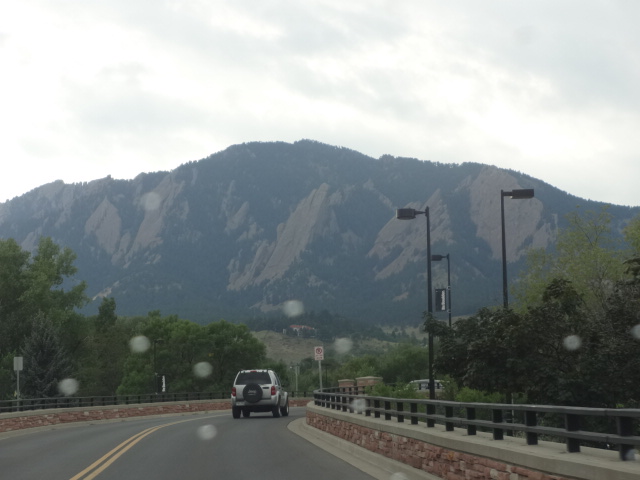
  • That's the Rockies back there and the university in the foreground.

    That’s the Rockies back there and UC Boulder  in the foreground: close but not the same.

    Familiar scene: the surging to and fro on the hour.

    Familiar scene: the surging to and fro on the hour.

    Some confuse matriculation with mastication.

    Some confuse matriculation with mastication.

  • No matter how extremely remote the station or town, gas and food are cheaper than in California: we’re being taken for a ride out here.
  • Boulder, like Santa Cruz, Berkeley or other college towns is a cut above the average but with the same mix of university people, boutiques, gourmet bistroes and cheap eateries, chain and box stores, and more than a few tourists. The sense of artifice is always in the air.
  • Lest we forget. Boulder is the western terminus of the great plains that begin back at the Mississippi River.

    Lest we forget. Boulder is the western terminus of the great plains that begin back at the Mississippi River.

    And some roads aren't even blacktop as they head toward that great mountain barrier.

    And some roads aren’t even blacktop as they head toward that great mountain barrier to the west.

  • Our two lane blacktops are in better condition than our freeways.
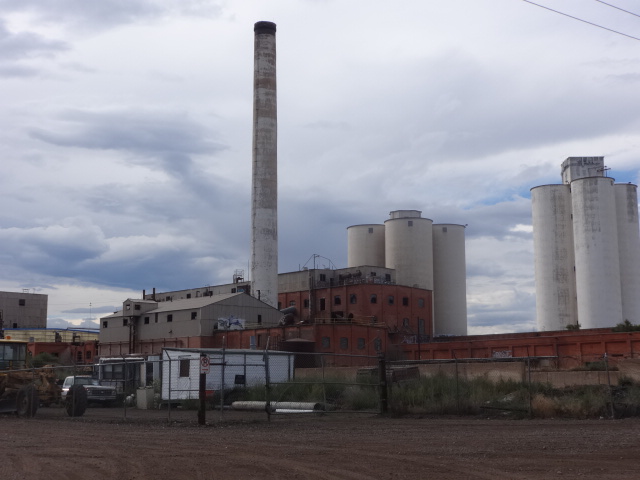
  • A shut down suger mill. TheBoulder area teems with huge, low lying, high tech factories, the new crop that this vast land supports.

    A shut down suger mill. The Boulder area teems with huge, low lying, high tech factories, the new crop that this vast land supports.

    In a Boulder bookstore. on the left anatomy, a reminder of my brief but happy medical training, and on the right: movies!

    In a Boulder bookstore. on the left: anatomy, a reminder of my brief but happy medical training, and on the right: movies!

  • I can drive almost 2000 miles without TV of any kind, but can’t go a day without wi-fi.
  • GPS is a luxury; maps work. I relied on them entirely.
  • Backroads are majestic and magical; freeways are like never leaving home.
  • The most horrific bump was on a freeway just miles out of San Francisco. I discovered, on arrival, thanks to another driver telling me, that my tail lights were all out. I found the light assemblies on both sides had been jarred out of their receptacles, fallen down into the trunk well and were useless–maybe for the entire trip! I may have driven to Boulder without tail or brake lights the entire way.
  • Travelers depend on the kindness of strangers and I was never let down. It isn’t the obsequious sort of attention that the tourist trade creates, not on the backroads; it’s more a genuine openness and curiosity about those who come from other places.
  • A definite beauty surrounds this place. It's not all malls and tourists and shopping centers, and not only a major university at all.

    A definite beauty surrounds this place. It’s not all malls and tourists and shopping centers, and not only a major university at all. Much awaits discovery.

    Heading out of town for a brief escape into the Rockies.

    Heading out of town for a brief escape into the Rockies.

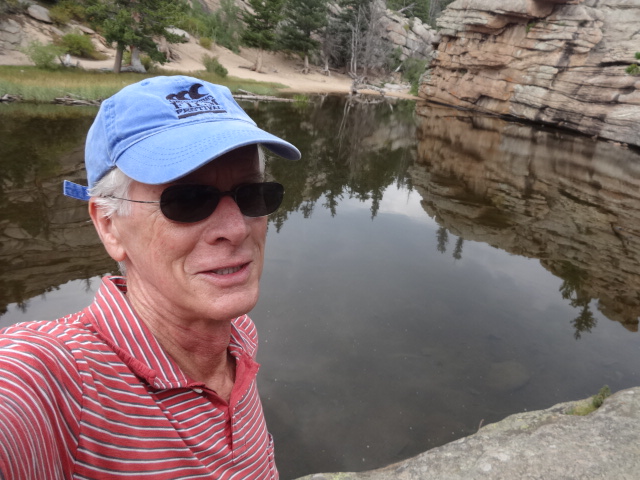
    Gem Lake. In Rocky Mtn Natl Park. About 7000 feet high at the end of a steep, demanding trail. Reward enough.

    Gem Lake. In Rocky Mtn Natl Park. About 7000 feet high at the end of a steep, demanding trail. Reward enough.

    In December I return to San Francisco, on different roads, ahead, I hope, of the winter snows.

Boulder Bound: Day 8 (Romance of the Road and Paleo Diet)

For Victoria: the one I left behind, for now.

Beyond the motel window dawn breaks on the final day.

Beyond the motel window dawn breaks on the final day. What will it bring?

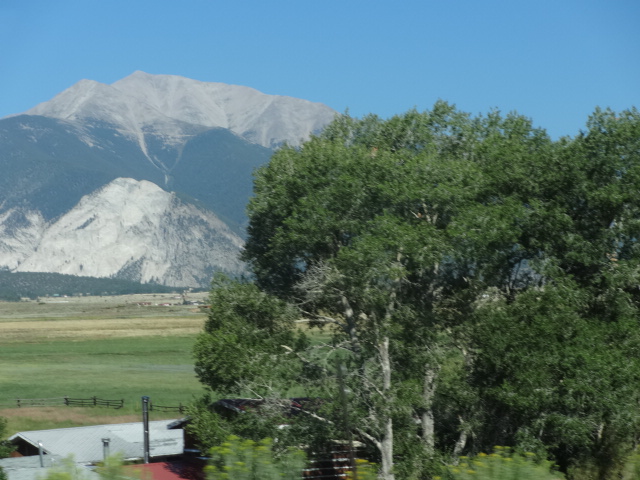
At first, it’s the same; here Mt. Antero looms at 14,276 feet, way above my head.

The shape of Antero reminded me of Mt. kilimanjaro, which I climbed long ago, and of the links of past and present and if travel were a passage way between them.

The shape of Antero reminded me of climbing Mt. Kilimanjaro, long ago, of the links of past and present and if travel were a passage way between them.

What is this idea of the road and its romance? Freedom, escape, wandering, discovery, journeys both internal and beyond. Celebrating the impromtu and improvised, the unfamiliar and mysterious. John Ford knew the road warrior, and the seeker, didn’t belong: they were too driven or restless to settle down, amd John Wayne watches the closing door exclude him at journey’s end in The Searchers.

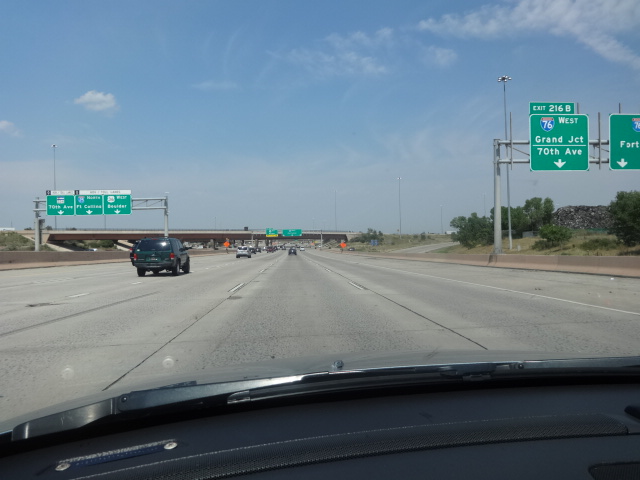
The two lane blacktop gives way to the concrete freeway and a familiar, crowded world: Denver, 30 miles to Boulder.

The two lane blacktop gives way to the concrete freeway and a familiar, crowded world: Denver, 30 miles to Boulder.

I feel tired, exhilerated, awakened and exhausted. We’re told we’re social animals but how so? As bands of roving gatherers or clusters of city and town folk?

Paleo diets return us the days of hunters and gathers but maybe not their intimate relation with the spirit world.

Entering Boulder, street lights and other amenities. The mountains just beyond.

Entering Boulder, street lights and other amenities. Rain. The mountains just beyond.

I am a settled one, basically. But with a thirst for something more. Community and place are where intimacy with and commitment to others flourish. Wandering and travel brings a sharper focus to an inner need for something else. Settlements sustain and have for millenia. And when they don’t, when I feel the need to seek and discover something beyond the settlement door, I hear the romance of the road beckon.

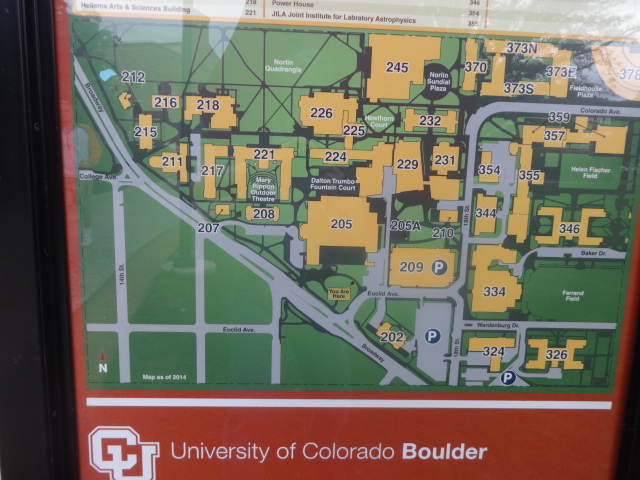
The Univeristy of Colorado at Boulder: numbers galore. Small testimony to the tension between the one and the many.

The Univeristy of Colorado at Boulder: numbers galore. Small testimony to the tension between the one and the many.

Freud realized that we paid a heavy price sexually for the retraints civilization imposes on our inherent polymorphous perversity. I wonder if it doesn’t exact a cost spiritually as well.

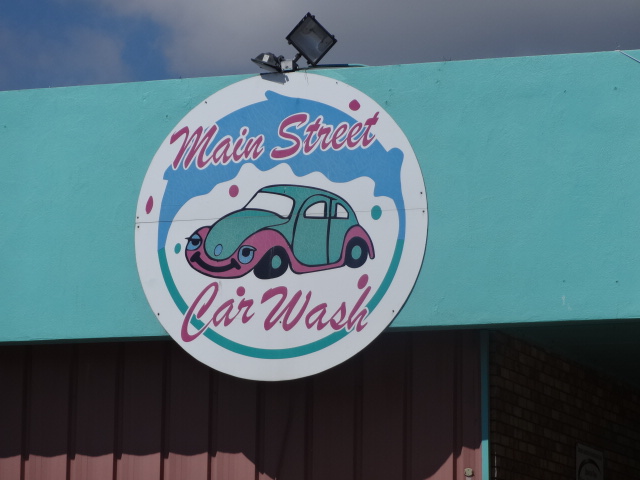
I take my car to a car wash to clear away the residue of the long road taken.

I take my car to a car wash to clear away the residue of the long road taken.

Near my new residence. Wash, clean up, cleanse.

Near my new residence. Wash, clean up, cleanse.

Spiritual seekers have often been wanderers, entering the wilderness, undertaking journeys and quests. Be it Jesus or the Buddha, or so many other saints and gurus, it strikes me that the seeker seeks something profoundly personal and spiritual and that it is the followers who settle for a religion they can sink into more stable soil.

A pamphlet in the car wash waiting area. A shock. And reminder of what our settled ways produce as suffering and loss, along with the dramatics of helping those who lose their way.

A pamphlet in the car wash waiting area. A shock. And reminder of what our settled ways produce as suffering and loss, along with the dramatics of helping the casualities of a failed community.

I have arrived. I need to settle down, settle in, maybe just settle. And wonder if this is where I need to rediscover that spiritual quality so much more evident on the road.

My car emerges, clean. And what I write and what I see diverge most strikingly in this final post from the road.

My car emerges, clean. And what I write and what I see, text and image, diverge most strikingly in this final post from the road. Why?