A New Stadium for the Golden State Warriors

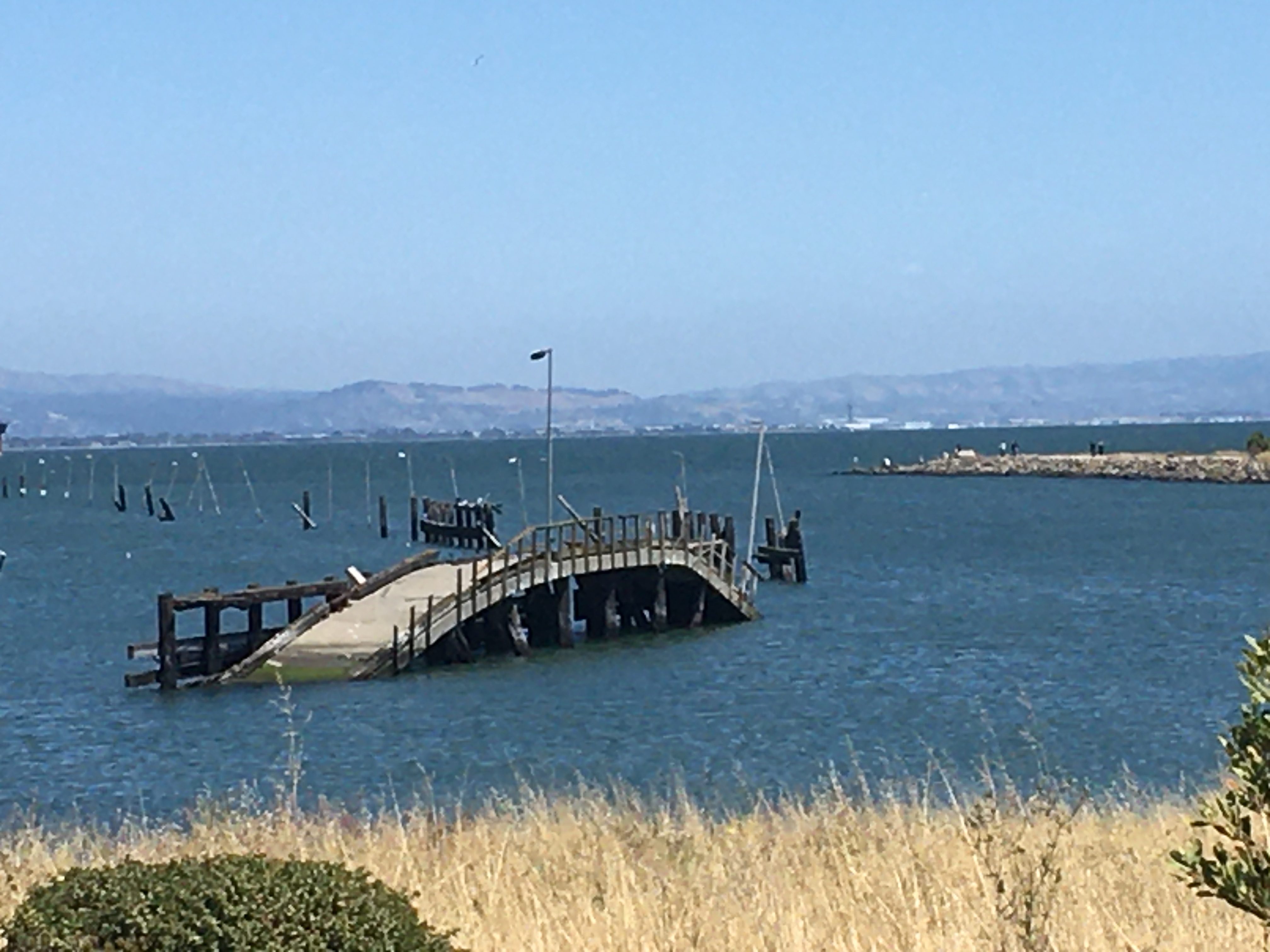
Co-owner of the Golden State Warriors Peter Guber, wrote a best-selling book, Tell to Win.  In it he insists, rightly, that story trumps data every time.  The story of “Let’s give the Golden State Warriors a beautiful new home in San Francisco, right on the water front,” sold our city leaders.  But they forgot the facts: no parking, limited public transit, blocked views of the bay, and a loss of proportionality along this priceless stretch of shore.

Let’s try another story line: “Elevate before you celebrate.  Don’t crowd the sea, nest the stadium in the air: put it right above the CalTrans station, just as Madison Square Garden perches above Penn Station in New York. Presto: available parking and unused rail yard space just a block to the south for more; the 280 freeway empties onto surface streets just a few blocks away, BART and Muni have stations within easy walking distance, and CalTrans riders can easily pop upstairs to see a game; sightlines to the bay remain possible, and proximity to AT&T park creates the potential for an extraordinary sports mecca.  The stadium will rise several stories into the air but above that there’s an opportunity to build offices, condominiums and a hotel/restaurant complex that would form the perfect complement.

The exiting story ihas serious flaws in it but the enthusiasm to bring the Warriors to the city made them seem inconsequential, at first. They are hardly that.  Once we’ve heard the story, the facts slowly creep back into view and give very serious pause. Let’s welcome the Warriors by all  means but do we want a Titanic on the waterfront when we can have an eagle in the air? I hope Mr. Guber and his partners bring their pogo sticks with them and take a good look at what awaits them as the ideal b-ball site.

Rebels with a Cause or How to Create the World’s Most Amazing Green Belt

Cities sprawl and drag their inhabitants into the ticky tacky world of suburbia.  The core decays and banality ensues. Then prices draw the young and restless back to the core and a new cycle of gentrification begins.  A familiar tale but not the one told by this astounding film. Rebels is about the creation of vast stretches of preserved shoreline, meadows, fields, and hills in the land to the north of San Francisco, Marin County, and around the perimeter of San Francisco itself.  Many now come to the city and marvel at the splendor of the Presidio and Crissy Field with its spectacular views of the bay and the Golden Gate bridge from ground level.  They come and revel in the beauty of Mt. Tamalpais to the north and the vast stretches of farms and untouched lands surrounding Tamales Bay.  Few realize that this was not the result of enlightened politicians acting to serve the common good but of an intrepid band of ordinary citizens who, over more than 20 years, fought corporations, developers and politicians to save what would have otherwise turned into vast stretches of houses, hotels, conference centers and shopping malls.

Nancy Kelly’s film lets the surviving rebels tell their own story but accompanies it with a treasure trove of archival footage, including Richard Nixon being convinced that there’s more political gain in backing conservation than opposing it.  One of the biggest battles was with ranchers near Tomales Bay who feared government regulation and meddling if their land were turned into a park, not the mention the loss of a way of life.  They favored development that would at least let them cash out at a handsome price.  But a brilliant maneuver saved the day: incorporate the ranches into the area to be preserved but allow the ranchers to continue to use the land for agricultural purposes.  By also forestalling the rise of concessions and hotels, attractions and stores at the periphery of the preserved land, the rebels were able to maintain the fundamentally rural quality of the area and allow farmer, ranchers and visitors to coexist successfully.

A second major challenge was a proposal for the huge city of Marincello, right in the thick of Marin County and just north of the Golden Gate Bridge where breath taking hills and valleys great the modern visitor.  Such a development carried such an aura of inevitiablity in the pro-growth, pro-development oriented 1960s that the corporate giant Gulf + Western bought a major stake in the project. The rebels went to work, arousing wide spread support from the residents of Marin and from key politicians.  After several years G + W threw in the towel and offered to sell the land to the nature conservancy that had been formed for just that sort of purpose.  A similar tale unfolded in the city where citizen leaders fought to establish a string of parks from beaches and former forts along miles of ocean and bay frontage.  With great political support from key figures, they succeeded.

Rebels with a Cause offers a great model of citizen activism.  These rebels clearly relied on vital political allies who took serious risks to back a movement that opposed growth, new businesses and jobs, rural development, and heigthened economic prospertiy at a time when such notions were a virtual mantra for many.  Nancy Kelly captures this effort with clarity and passion.  It stands as a greta model for those who are now rebels in the making.


Geographies of Detention in Riverside

This is an exhibition at the California Museum of Photographyin Riverside CA on the theme of incarceration, linking the “detention center” at Guantanamo with the 33 prisons spread across the remote regions of California.  A featured element of the show is the “Prisonation” series of painting by Sandow Birk. He did an oil painting of each prison in the Romantic landscape style of Bierstadt, Church and others.  At first glance we see an idyllic world of nature.  On second glance we see its conversion to a space of incarceration. What pioneers traversed, prisoners don’t. They are out of sight, hidden behind the prison walls and surrounding landscape.  Most of the paintings appear inside 19C frames that Birk found at flea markets and they are 24 – 36″ across, give or take, but a very large painting of San Quentin is on the second floor of the de Young museum in San Francisco where most visitors pass it by as just another example of idyllic landscapes, like so many of the other paintings with which it shares the floor but which are detonated from the inside as Birk undercuts the enchantment with the wary eye of one who sees a modern truth beneath a old delusion.

Geographies of Detention_panel 060113

The accompanying flyer annouces their panel discussion on the show and presents one of the most haunting paintings in the series: Pelican Bay.  The blue tones and ghostly absences give it a deeply disturbing edge.  I’ve had to put it in my study, behind my desk where I can see it readily but not constantly.  it is far too strong for the living room in its phantasmatic portrayal of incarceration behind watch towers, chain link fence, water sprinklers and the verdant world of green.

The Reluctant Fundamentalist: or why can’t Mira get that Bollywood Music out of her Hair?

Changez (Riz Ahmed, a handsome actor with limited range and modest charisma) is at home in Pakistan for a family celebration. Music plays, men sing, and we begin cross cutting to a kidnapping and the ransacking of an office.  The men sing more, the kidnapping goes on. The men sing louder and it goes on some more.  Louder and louder, to the same beat, without subtitles, although the close ups make it seem important and probably portentous.

And there’s the rub.  Mira Nair, a director of some achievement, just can’t stop the music.  it intrudes over and over in this tale of a Pakistani over-achiever who goes to Princeton, lands at a super charged investment firm, acts instinctively with a ruthless passion for the bottom  line, meets an almost unrecognizable Kate Hudson (it was shot in the aftermath of her second pregnancy) as a playful, formally inclined artist who’s of course the daughter of the firm’s top man, and then inevitably gets caught up in the racist hysteria of post 9/11 that targets him repeatedly as a national security threat based not on his custom made suits but his skin color. If this weren’t dramatic enough (though riddled with plot holes of every size), Nair tacks on the droning but hyperbolic music of Bollywood at its most stereotypical. It makes a decent film close to unbearable.

There is not only Erica’s (Hudson) sudden discovery of politics and the inflammatory 9/11 inspired installation work she comes up with, never mentioning it to her Pakistani boyfriend who had had harrassment aplenty by this point, and Liev Schreiber’s burnt out CIA/reporter character whose multiple identities and motives revolve like a crazy top around his loss of direction, except for finding his kidnapped buddy, an CIA case officer posing as an avuncular academic.  There is also the lame demonstration of Changez’s skill as a ruthless cost cutter with examples so obvioius, and implausible, that one imagines the other newcomers didn’t make them because they knew just how obvious or exaggerated they actually were.  And to top it all, the flashback structure, by which Changez tells his life story while we await, 24 style, the ticking time bomb of an imminent “extraction” of Changez from his university in Lahore where Liev tries to learn the whereabouts of his kidnapped buddy, creates completely fabricated suspense.  Without the flim flam of flashback, were it told chronologically, the implausibility would crush the film, if the music didn’t do it first.  Changez doesn’t know about the kidnapping but to reveal that would rob the film of its overwrought suspense.

Nair has definite talent but like Sidney Pollack she undercuts her material with sentimentality, something Katherine Bigelow learned to avoid in her quest to be even tougher and more right wing than the rest of the boys.

The de Young’s Jolika Collection of New Guinea Art: Imperilled by the Auction Block

I have to confess: I had to be escorted out of the space dedicated to the Jolika Collection of New Guinea art in San Francisco’s de Young musuem.

Not for wrongdoing but because the spirits in that space possessed me.  And I hasten to add: as a film professor, author, and modest art collector, I have my feet on the ground.

On more than one occasion a piece in the collection has riveted me in place.  Energy passed between us and I could not move.  The first time it happened I could not pass out of the room on my own and asked a Pacific Islander, serving as a museum guard, to escort me. He did and I was able to leave. I told him what happened and said to him the space was extremely spiritual and he replied, “I know.”

To me, the Jolika Collection is the greatest treasure in the museum.  Not just for its stunning beauty and remarkable range but for its deeply spiritual quality as well. I have seen Maori pass through talking among themselves, in their native language, in what were clearly tones of awe.  I imagine many others have had comparable experiences but perhaps not the museum staff.

They plan to deacquisition significant pieces from the collection at auction to raise funds fofr the museum, which feels a bit like selling off your first born child to add another bedroom for future children.  How can a museum maintain its stature if it undercuts its own strengths with sales of great art?

Deacquisitioning any of this collection would be a huge loss and could easily imperil its unique qualities, aesthetic and spiritual. The auction date is set but there may be time to try to make reason, and spirit, prevail.

Les Blank

Les was a great filmmaker and friend. He will be missed.

I had the honor of hosting his reception of a Lifetime Achievement Award at the Mendocino Film Fest, a little fest up the N. CA coast, and doing a q/a with him.

Having done this with Haskell Wexler the year before and worrying more about getting a word in than getting him to open up, there was just a bit of anxiety with Les who is prone to the laconic but after a clip from The Blues According to Lightnin’ Hopkins and a little appreciation of his subtle, non-verbal thematics, he lit up and talked freely of his wilder days of parties and partying and his film aesthetic of respect, appreciation and open-endedness. It was a great event and one I will cherish now that he is gone.